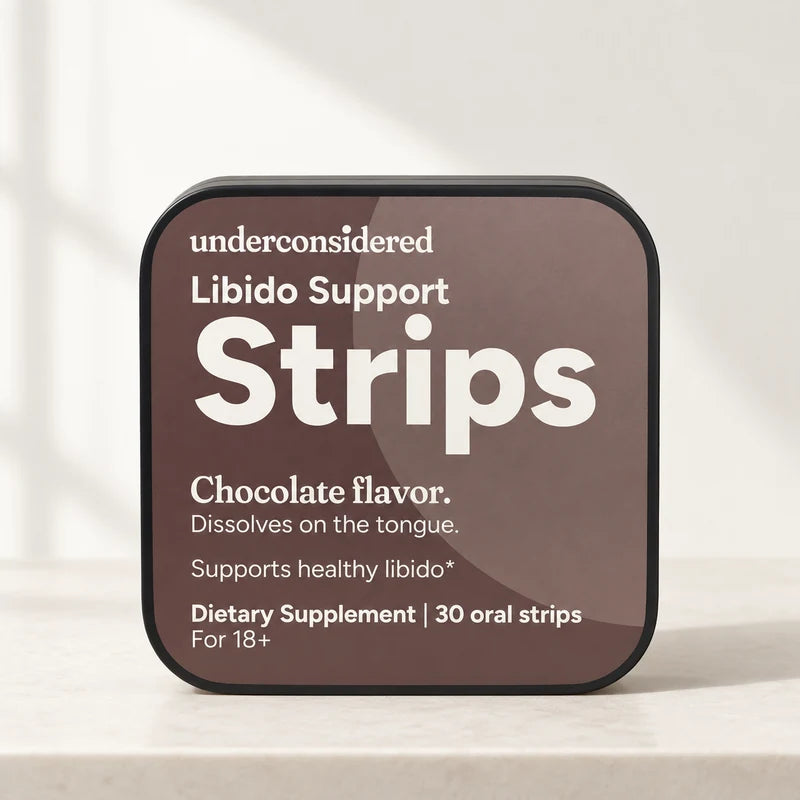
 Libido Support Strips
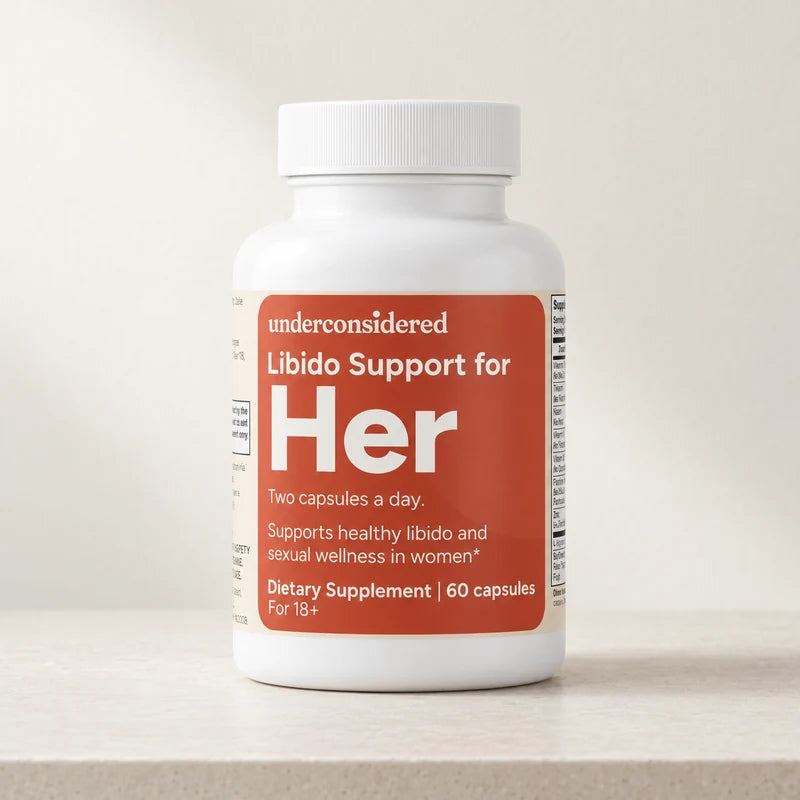 Libido Support for Her
 Libido Support for Him
 Citrulline + Arginine

The front of a supplement can be a busy place. A name, a color, a short phrase. The useful reading often starts around the back.
A Supplement Facts panel has a set order. Learn that order once, then use it when comparing products. There is no prize for reading quickly.
Start with the serving size
Find the serving size before looking at any amount. It may be one strip, two capsules, or something else.
The amounts in the panel refer to that serving. An amount per three capsules is not an amount per capsule.
Write the serving size beside the product name when comparing labels. That small note can avoid a very large mix-up.
Next, find servings per container. A bottle's capsule count and its serving count may be different. Sixty capsules can be thirty two-capsule servings.
Read the ingredient and its amount together
An ingredient name without its amount leaves out part of the picture. Read across the row before moving down to the next one.
Units matter, too. A milligram and a microgram are different units. Keep the printed unit attached to the number in any notes.
Do not guess an amount from the size of a bottle or the order of a marketing list. Use the actual panel.
If information is missing, ask the seller for the current label. A blank is a reason to pause, not a puzzle to solve.
Understand the Daily Value column
Some nutrients have a percent Daily Value. It gives context for the nutrient in a serving, using the reference shown on the label.
Not every supplement ingredient has an established Daily Value. A missing percentage does not supply evidence about what an ingredient does.
Avoid turning the largest percentage into a buying rule. Bring amount questions to a doctor or pharmacist, with the full product label.
Keep reading beyond the panel
The list called other ingredients also belongs in the decision. It may include materials used for the capsule, flavor, or texture.
Then read directions, warnings, and storage instructions. These sections answer different questions. None is a substitute for the others.
A short shop description should help locate those details. It should not replace them. Keep a photo of the actual label when discussing a product.
Compare the whole order
Once the label makes sense, check the price and quantity. Ask how many servings the order contains and how many people will use it.
Check whether the price is for buying once or a recurring plan. A lower number is only useful when the billing terms are clear.
At Underconsidered, one tin contains 30 strips. The direction is one a day, so the tin is one person's 30 day supply.
Two tins make The Pair. That is a quantity choice. It is not a different formula or a different daily direction.
Take one useful question away
Try this: “Can we review this label alongside the things I already take?” Bring the panel, other ingredients, and directions to the conversation.
A professional review needs the actual product details. A front label, a familiar ingredient name, or a confident advert cannot do that job.
A good reading habit is simple. Start with the serving. Read every row. Keep the gaps visible. Ask before guessing.
Sources: